Storm Hardening and Resilience: Investing Billions to Prepare for the Inevitable
Climate change is no longer a distant threat—it’s a present reality manifesting in increasingly frequent and severe weather events that test utility infrastructure to its breaking point. Hurricanes, ice storms, floods, heat waves, and extreme winds occur with intensifying frequency and impact, each event resulting in massive outages, emergency response costs, customer hardship, and reputational damage. For utilities, storm hardening and resilience have evolved from periodic maintenance considerations into strategic imperatives demanding billions in capital investment. The challenge isn’t just the magnitude of investment required, but the fundamental difficulty of quantifying resilience value, prioritizing across competing hardening strategies, and securing regulatory cost recovery for preventing problems that may never materialize.
The Escalating Storm Threat
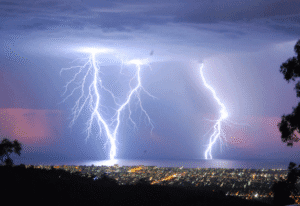
The data is unambiguous: extreme weather events are becoming more frequent and more severe. The past decade has seen an unprecedented number of billion-dollar weather disasters in the United States. Hurricanes that once occurred every 50 years now happen every 10-15 years. “Hundred-year” floods are occurring multiple times per decade. Ice storms paralyze regions unaccustomed to such events. Heat waves stress both generation capacity and transmission infrastructure. The traditional statistical models utilities used to design infrastructure—based on historical weather patterns—are becoming obsolete as climate change creates conditions outside historical experience.
Each major storm event imposes enormous costs beyond immediate restoration expenses. Hurricane-force winds snap poles and topple trees onto lines. Ice accumulation causes catastrophic failures of transmission towers and distribution equipment. Flooding inundates substations and underground infrastructure. The resulting outages can extend for days or weeks, affecting millions of customers. Beyond utility costs, societal impacts cascade through every sector: hospitals operating on backup power, businesses losing revenue, perishable goods spoiling, and vulnerable populations facing life-threatening conditions without electricity for heating, cooling, or medical equipment.
The reputational and regulatory consequences are equally significant. Extended outages generate intense public criticism, regulatory scrutiny, and often result in formal investigations, penalty proceedings, and mandates for accelerated hardening investments. Utilities find themselves in a no-win situation: criticized for inadequate hardening after storms occur, yet facing resistance to rate increases for proactive investments before disasters strike.
The Hardening Investment Challenge
Storm hardening encompasses multiple strategies, each with different costs, benefits, and effectiveness profiles. Undergrounding distribution lines – burying them below surface where they’re protected from wind, ice, and falling trees – provides the most comprehensive protection but costs 5-10 times more than overhead construction. Even aggressive undergrounding programs might only address 1-2% of overhead lines annually, meaning complete undergrounding would take 50-100 years at costs running into tens or hundreds of billions for a single utility.
Selective hardening – upgrading poles to withstand higher wind speeds, installing stronger conductor attachments, using covered conductors that resist tree contact – costs less but provides partial protection. Vegetation management programs that aggressively trim trees near lines reduce storm outage risk but require continuous investment and face pushback from property owners and environmental advocates. System reconfiguration strategies like grid segmentation and additional sectionalizing devices limit outage extent without preventing infrastructure damage. Distributed generation and microgrid investments improve resilience by maintaining service to critical facilities even when the broader grid fails.
Each strategy has different cost-effectiveness profiles depending on local conditions, threat types, and existing infrastructure characteristics. Undergrounding makes sense in high-exposure coastal areas facing hurricane risk but may be less valuable in areas where underground infrastructure faces flooding risk. Vegetation management provides better returns in wooded suburban areas than in open rural or urban environments. The challenge for utilities is determining optimal investment portfolios across these strategies given limited capital budgets and diverse system characteristics.
Quantifying Resilience Value: Prevention vs. Response
Perhaps the most fundamental challenge in storm hardening is quantifying benefits. Traditional utility cost-benefit analysis compares investment costs against measurable benefits like reduced maintenance expenses or energy losses. Storm hardening investments, however, primarily prevent outages that would otherwise occur – a fundamentally harder benefit to quantify. How much value does undergrounding a circuit provide? It depends on storms that may or may not happen, with severity that’s uncertain, affecting customers whose outage costs are difficult to measure.
Utilities attempt to quantify resilience value through metrics like customer interruption costs, business disruption impacts, and avoided restoration expenses. However, these approaches struggle with low-probability, high-consequence events. A circuit might operate for years without a major storm outage, suggesting low hardening value, then experience a catastrophic multi-week outage that would have been prevented by hardening investment. Traditional return-on-investment calculations heavily discount distant future benefits, yet resilience investments specifically protect against rare but severe events that may be many years away.
This creates tension between engineering judgment that certain hardening investments are clearly valuable and financial analysis that struggles to demonstrate adequate returns. Regulators, facing ratepayer advocates arguing against expensive hardening programs, often demand rigorous benefit-cost demonstrations that the nature of resilience investment makes difficult to provide. The result is often under-investment in hardening relative to actual risk, with aggressive investment occurring only after major storm events force the issue.
Prioritization and Optimization Under Constraints
With hardening needs far exceeding available capital budgets, utilities face difficult prioritization decisions. Should they focus on circuits serving critical facilities like hospitals? High-value commercial and industrial customers? Areas with worst historical performance? Regions facing highest future storm risk? Each approach has merit, yet they often point to different investment priorities.
Data-driven prioritization requires integrating multiple data sources: storm risk modeling, circuit performance history, customer criticality assessments, infrastructure condition data, and hardening cost estimates. Utilities need sophisticated analytics to identify which investments provide the greatest risk reduction per dollar spent, considering both the probability of storm events and the consequences of resulting outages. This optimization becomes more complex when considering interdependencies—hardening one circuit segment provides limited value if upstream or downstream segments remain vulnerable.
The temporal dimension adds further complexity. Should utilities make modest hardening investments across many circuits or comprehensively harden a smaller number of high-priority circuits? Fast-cycle strategies that show visible progress quickly may build regulatory and public support but achieve less overall risk reduction than concentrated investments that thoroughly address specific vulnerabilities. Balancing near-term political and regulatory pressures against long-term risk optimization requires sophisticated strategic planning that many utilities struggle to execute.
Integration with Broader Grid Modernization
Storm hardening doesn’t occur in isolation – it must integrate with broader grid modernization, capital planning, and operational strategies. Advanced metering infrastructure enables faster outage detection and restoration prioritization. Distribution automation allows faster service restoration through remote switching. Enhanced forecasting and situational awareness systems improve pre-storm preparation and post-storm response. Grid sensors and monitoring systems provide real-time infrastructure condition information that supports both hardening prioritization and storm response.
However, integration creates coordination challenges. Different utility departments often manage hardening programs, vegetation management, capital planning, and grid modernization initiatives separately, leading to missed optimization opportunities. A holistic approach would evaluate hardening investments alongside alternative strategies like distributed generation, microgrids, and enhanced operational capabilities, optimizing across the full solution space rather than pursuing each strategy independently. Few utilities have developed the organizational structures and decision frameworks to truly integrate these historically separate domains.
Regulatory Strategy and Cost Recovery
Securing regulatory cost recovery for hardening investments requires sophisticated regulatory strategy. Utilities must demonstrate that proposed investments are prudent, cost-effective, and appropriately prioritized given other system needs. This requires robust data analytics, credible risk modeling, and clear communication about tradeoffs between hardening costs and storm outage risks. Regulators and stakeholders need to understand that hardening investments are insurance—they provide value by preventing negative outcomes, not generating measurable returns.
Some utilities have successfully implemented storm hardening surcharges or riders that recover costs outside of general rate cases, reducing regulatory lag and providing more certain cost recovery. Others have negotiated performance metrics where hardening investments are evaluated based on system reliability improvements rather than traditional rate-of-return regulation. These alternative approaches require regulatory relationships built on trust and transparent data sharing that demonstrate utilities are investing efficiently and effectively.
At nfoldROI, we help utilities transform storm hardening from a reactive expense into a strategic, data-driven investment program. Our advanced analytics platforms integrate weather risk modeling, infrastructure vulnerability assessment, customer impact analysis, and financial optimization to identify hardening investments that provide maximum risk reduction per dollar invested. We help utilities prioritize across competing strategies—undergrounding, selective hardening, vegetation management, operational improvements—based on quantified risk reduction and cost-effectiveness rather than intuition or historical practice.
Our decision support tools enable utilities to build compelling regulatory cases by quantifying hardening benefits, demonstrating optimization across alternatives, and showing how proposed investments align with risk-based prioritization frameworks. By making resilience value explicit and measurable, we help utilities secure cost recovery for necessary hardening investments while ensuring capital is deployed where it provides greatest benefit. In an environment where storm risk is escalating, budgets are constrained, and regulatory scrutiny is intense, data-driven hardening optimization becomes essential for utilities seeking to protect customers, manage financial performance, and build genuinely resilient systems that can withstand the inevitable extreme weather events that climate change is making increasingly common and severe.