The Utility Workforce Crisis: Losing Institutional Knowledge During the Industry’s Greatest Transformation
The utility industry faces a cruel timing paradox: just as it embarks on its most ambitious transformation in history—integrating renewable energy, modernizing the grid, managing distributed resources, and deploying advanced technologies—it’s losing the experienced workforce that has kept the lights on for decades. The convergence of mass Baby Boomer retirements and difficulty attracting younger, tech-savvy talent creates a workforce crisis that threatens utilities’ ability to execute their strategic vision while maintaining day-to-day operational excellence.
The Great Retirement Wave and Knowledge Drain
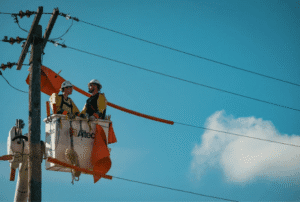
The statistics are sobering. Approximately 25-30% of the utility workforce is eligible to retire within the next five years, with some utilities reporting even higher percentages among critical roles. These aren’t just numbers on an HR spreadsheet—they represent decades of accumulated institutional knowledge walking out the door. Experienced lineworkers who can diagnose problems by sound and feel, protection engineers who understand the quirks of specific substations, and operations personnel who’ve navigated countless storm restorations possess irreplaceable expertise that can’t be captured in manuals or databases.
The knowledge loss extends beyond technical skills. Veteran employees understand informal networks, know whom to call in emergencies, and carry institutional memory about why certain decisions were made decades ago—context that’s often crucial for present-day planning. When a 35-year veteran retires, utilities lose not just their current capabilities but also their ability to provide historical perspective on system evolution, equipment performance, and operational lessons learned. This erosion of institutional knowledge creates risks that may not become apparent until a crisis occurs and the person who “always knew how to handle this” is no longer there.
The Talent Attraction Challenge in a Digital Age
Compounding the retirement problem is utilities’ struggle to attract the next generation of workers, particularly in technology-intensive roles. The modern grid requires skills that didn’t exist when many current employees were hired: data scientists to analyze smart meter data, cybersecurity specialists to protect critical infrastructure, software engineers to develop grid management applications, and IoT specialists to manage millions of connected devices. These professionals are in high demand across industries, and utilities often find themselves competing with technology companies, consulting firms, and startups that offer more attractive compensation, workplace flexibility, and perceived career dynamism.
The challenge isn’t just about compensation—it’s about perception and culture. Many young professionals view utilities as traditional, bureaucratic organizations rather than the technology-driven innovators they’re becoming. The steady, predictable nature of utility work that appeals to some candidates is precisely what turns off others seeking fast-paced, high-impact roles. Geographic considerations compound the problem, as utility operations are often located in areas less attractive to young tech workers who prefer urban environments with vibrant cultural scenes and robust professional networks.
The Skills Evolution: From Mechanical to Digital-Physical Hybrid
Even for roles utilities successfully fill, the skill requirements are evolving faster than training programs can adapt. Today’s distribution engineers need to understand not just traditional circuit design but also DER integration, advanced analytics, and non-wires alternatives. Field technicians increasingly work with sophisticated sensors, communications equipment, and data systems alongside traditional electrical infrastructure. Control room operators must manage bidirectional power flows, coordinate distributed resources, and respond to cyberattacks in addition to their traditional grid management responsibilities.
This skills evolution requires massive investments in training and development, but utilities face a chicken-and-egg problem: they need experienced workers to train new hires, but those experienced workers are retiring before knowledge transfer is complete. Apprenticeship programs that historically took 3-5 years to develop fully qualified lineworkers must now incorporate new technologies and safety protocols. Engineering training must blend traditional power systems knowledge with data analytics, software development, and systems thinking. The pace of technological change means that even recently trained employees need continuous upskilling to remain effective.
Operational and Strategic Risks
The workforce crisis creates tangible operational risks. Utilities report longer restoration times after storms due to fewer experienced crews. Maintenance and inspection programs struggle with capacity constraints. Major capital projects face delays due to shortage of qualified engineers and project managers. Safety risks increase when less-experienced workers handle complex, dangerous work. These operational impacts occur precisely when utilities face pressure to improve reliability, accelerate infrastructure investments, and meet ambitious clean energy targets.
Strategically, workforce challenges constrain utilities’ ability to execute their transformation agendas. Ambitious plans to modernize the grid, integrate DERs, and deploy advanced technologies require skilled people to design, implement, and operate them. When utilities can’t fill positions or must rely on expensive contractors, projects slow down, costs increase, and strategic timelines slip. The workforce gap becomes a bottleneck that limits the pace of innovation and transformation regardless of available capital or regulatory support.
Bridging the Gap: Technology as a Force Multiplier
While there’s no complete substitute for human expertise, technology can help utilities bridge the workforce gap by making employees more effective and capturing institutional knowledge before it walks out the door. Advanced analytics and AI can augment human decision-making, helping less-experienced employees make better choices by leveraging data and historical patterns. Digital twins and simulation tools can accelerate training by allowing workers to practice complex scenarios safely. Knowledge management systems can capture and codify expertise from retiring employees, making it accessible to their successors.
Asset management platforms can prioritize maintenance activities more effectively, ensuring that limited workforce capacity is directed toward highest-value work. Mobile technologies provide field workers with real-time access to information, schematics, and expert support, reducing dependency on institutional memory. Automation of routine tasks frees skilled workers to focus on complex problems requiring human judgment and expertise. These technological solutions don’t replace people—they multiply their effectiveness and help newer employees perform at levels that might otherwise take years of experience to achieve.
At nfoldROI, we recognize that the workforce challenge is fundamentally about maximizing the value and effectiveness of limited human capital. Our advanced analytics platforms help utilities make better decisions faster by providing data-driven insights that augment human expertise. We help utilities optimize workforce deployment, prioritize activities for maximum impact, and capture and leverage institutional knowledge through systematic data analysis. By turning decades of operational data into actionable intelligence, we enable utilities to bridge the gap between retiring expertise and emerging talent, ensuring that critical capabilities are preserved and enhanced even as the workforce transforms.